


 Cart
Cart
 sales@molnova.com



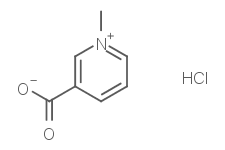
Trigonelline hydrochloride
CAS No. 6138-41-6
Trigonelline hydrochloride( Trigonelline hydrochloride )
Catalog No. M18902 CAS No. 6138-41-6
Trigonelline hydrochloride is extracted from the seeds of Trigonellafoenum-graecumL.
Purity : >98% (HPLC)
 COA
Datasheet
HNMR
HPLC
MSDS
Handing Instructions
COA
Datasheet
HNMR
HPLC
MSDS
Handing Instructions
| Size | Price / USD | Stock | Quantity |
| 100MG | 45 | Get Quote |


|
| 200MG | Get Quote | Get Quote |
|
| 500MG | Get Quote | Get Quote |
|
| 1G | Get Quote | Get Quote |
|
Biological Information
-
Product NameTrigonelline hydrochloride
-
NoteResearch use only, not for human use.
-
Brief DescriptionTrigonelline hydrochloride is extracted from the seeds of Trigonellafoenum-graecumL.
-
DescriptionTrigonelline hydrochloride is extracted from the seeds of Trigonellafoenum-graecumL.(In Vitro):It is found that Trigonelline chloride (TG) significantly rescues the morphology of the H9c2 cells. Treatment of cells with Trigonelline chloride attenuates H2O2 induced cell deaths and improves the antioxidant activity. In addition, Trigonelline chloride regulates the apoptotic gene caspase-3, caspase-9 and anti-apoptotic gene Bcl-2, Bcl-XL during H2O2 induced oxidative stress in H9c2 cells. For evident, flow cytometer results also confirm that Trigonelline chloride significantly reduces the H2O2 induced necrosis and apoptosis in H9c2 cells. However, further increment of Trigonelline chloride concentration against H2O2 can induce the necrosis and apoptosis along with H2O2.(In Vivo):Trigonelline chloride decreases bone mineralization and tends to worsen bone mechanical properties in streptozotocin-induced diabetic rats. In nicotinamide/streptozotocin-treated rats, Trigonelline chloride significantly increases bone mineral density (BMD) and tends to improve cancellous bone strength. Trigonelline chloride differentially affects the skeletal system of rats with streptozotocin-induced metabolic disorders, intensifying the osteoporotic changes in streptozotocin-treated rats and favorably affecting bones in the non-hyperglycemic (nicotinamide/streptozotocin-treated) rats.
-
In Vitro——
-
In Vivo——
-
SynonymsTrigonelline hydrochloride
-
PathwayCell Cycle/DNA Damage
-
TargetPotassium Channel
-
RecptorOthers
-
Research Area——
-
Indication——
Chemical Information
-
CAS Number6138-41-6
-
Formula Weight173.6
-
Molecular FormulaC7H8ClNO2
-
Purity>98% (HPLC)
-
SolubilityDMSO : 6 mg/mL 34.56 mM;
-
SMILESC[n+]1cccc(c1)C(=O)O.[Cl-]
-
Chemical Name——
Shipping & Storage Information
-
Storage(-20℃)
-
ShippingWith Ice Pack
-
Stability≥ 2 years
Reference
1. Zhang DF, et al. Asian Pac J Trop Med. 2015 Aug;8(8):651-4.
molnova catalog



related products
-
Glibornuride
Glibornuride is a blocker of ATP-sensitive K+ channel(pKi: 5.75). Glibornuride inhibits high affinity [3H]-glibenclamide binding with the potencies expected from their K+ channel activity.
-
Doxapram
Doxapram (Dopram) is a respiratory stimulant that inhibits TASK-1, TASK-3, and TASK-1/TASK-3 heterodimer channels and is used to study ventilatory failure caused by apnea of ??prematurity and exacerbation of chronic obstructive pulmonary disease.
-
Phe-Met-Arg-Phe amid...
Phe-met-arg-phe amide trifluoroacetate is an activator of K+ current with an ED50 of 23nm on the fundus nerve.
